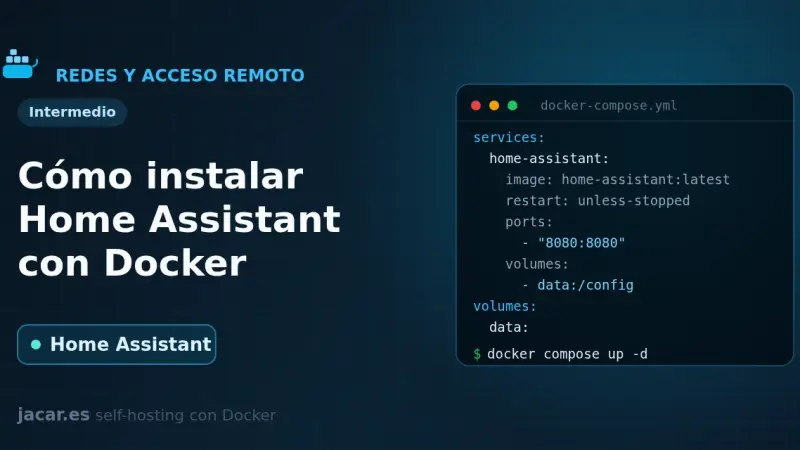
Home Assistant Container is the local home-automation platform installed as a Docker container: an official image, port 8123 and host-mode networking to discover devices. This guide brings it up with docker-compose, covers the first boot and backups, and makes clear it does not include the Supervisor add-on store.
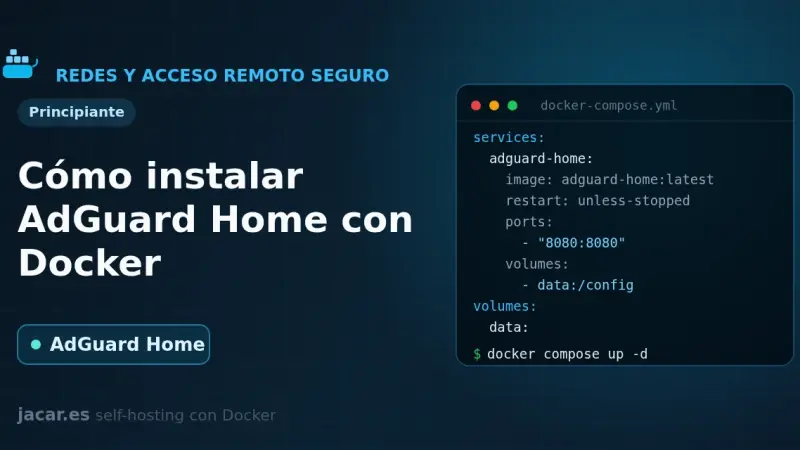
AdGuard Home is a free, open-source DNS server that blocks ads and trackers across your whole network from a single container. This guide brings it up with Docker Compose, fixes the port 53 conflict, walks through the setup wizard and turns on encrypted DNS and DNS rewrites.
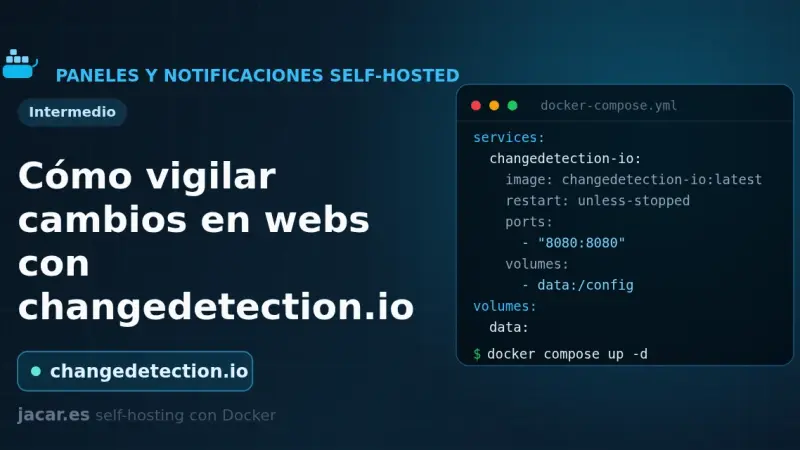
changedetection.io is an open-source tool that watches web pages and alerts you when they change: prices, stock, versions or official notices. This guide installs it with Docker Compose, adds a Playwright browser container for JavaScript sites, creates watches with CSS or XPath filters and sends notifications to ntfy or Gotify.
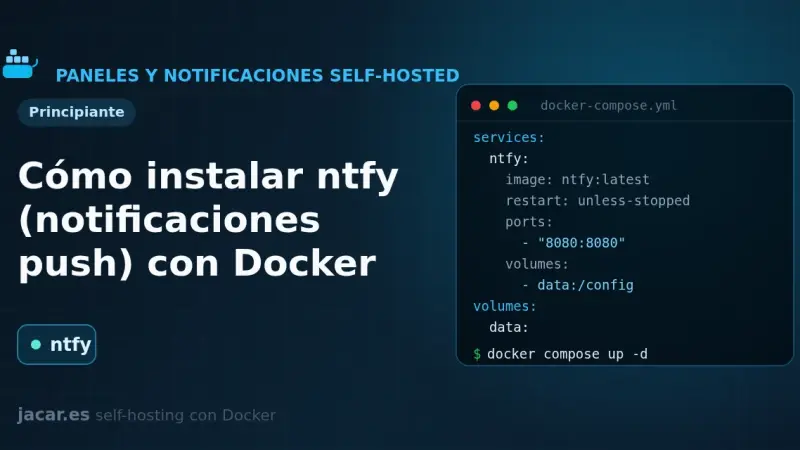
ntfy is a free, open-source HTTP-based push notification service that lets you send alerts to your phone or desktop with a simple PUT or POST request to a topic. This guide runs your own ntfy server with Docker Compose, publishes and subscribes to topics, and adds authentication and access control.
PegaProx 0.9.x is an AGPL-3.0 panel that manages several Proxmox VE 8 and 9 clusters, plus XCP-ng, from a single screen. It adds live migration across clusters, OIDC with Entra ID, a CVE scanner and one-click hardening on top of the stock GUI, which only covers one cluster at a time.
A home lab is a self-hosted services lab, at home or on a VPS, where you practice real system administration: reverse proxy, centralized authentication, monitoring with Prometheus and Grafana, and backups verified with Restic. A second-hand mini PC with 16 GB of RAM is enough for thirty or forty containers, and what you learn transfers directly to professional work.
6 min2324.5
We use first- and third-party cookies to analyze site traffic. You can accept them, reject them, or configure your choice.
Learn more about cookies
Cookie preferences
NecessaryEssential for the site to work. Always on.
AnalyticsHelp us understand how the site is used (Google Analytics).