Windsurf is the agentic code editor created by Codeium: a VS Code fork whose agent reads your project, plans and edits several files with your approval. In July 2025 Cognition, the company behind Devin, bought it, and on 2 June 2026 it was renamed Devin Desktop; its agent Cascade reached end of life on 1 July 2026 and was replaced by Devin Local.
Gemini CLI is Google's coding agent for the terminal: open source, with a one-million-token context window and the Gemini 3 model. Since 18 June 2026 its free tier for individuals moved to Antigravity CLI, but the tool still works with an API key from AI Studio or an enterprise licence.
Goose is an open-source AI agent created at Block that runs on your own machine as a desktop app, CLI and API. It reads and writes files, runs commands and tests, and works with more than fifteen model providers and MCP extensions. It is free, licensed under Apache 2.0, and you pay only for model usage.
OpenHands, formerly OpenDevin, is an open-source platform that solves programming tasks end to end: it takes a request, opens a sandbox container and edits files, runs commands and browses the web until it is done. It runs with Docker on your own machine and works with the model you choose.
The Codex CLI is OpenAI's coding agent that works inside your terminal: you describe a task, it reads your repository, proposes the changes and runs commands inside a sandbox you control. It is open source, installs with npm and works with your ChatGPT account or with an API key.
Roo Code is an open-source VS Code extension, born as a fork of Cline, that turns the editor into a team of agents with specialised modes (Code, Architect, Debug, Ask and Orchestrator). The project was archived in May 2026 at version 3.54.0, but its community continuation ZooCode keeps the same features alive.
Cline is a VS Code extension that turns your editor into an autonomous coding agent: it reads your project, plans changes in Plan mode and carries them out in Act mode, showing every edit as a diff you approve. It is open source and works with your own API key or with local models.
A multi-agent system splits a task across several specialised agents coordinated by a design pattern. The three most common are orchestrator-workers, where a lead agent delegates to parallel subagents; hierarchical, with teams of teams; and network, where any agent hands control to another through a handoff.
ReAct and plan-and-execute are the two control patterns for an AI agent. ReAct decides one step at a time, reasoning and acting in a loop; plan-and-execute draws up a full plan first and then executes it step by step. The former adapts better to surprises; the latter uses fewer calls and plans long tasks with more order.
Context engineering is the craft of deciding what information enters a model's window at each step of an agent. Beyond prompt engineering, it manages the whole set of tokens: instructions, tools, memory and history. Its goal is the smallest possible set of high-signal tokens that still completes the task.
Human-in-the-loop is the pattern that keeps a person inside an AI agent's decision loop: the agent stops at an approval point before an irreversible action, waits for your confirmation and resumes with its state intact. Frameworks such as LangGraph and OpenAI's Agents SDK implement it with interruptions and tool approval.
Memory is what lets an AI agent remember beyond a single conversation. Its working memory is the context window, ephemeral and limited; its long-term memory stores facts, experiences and procedures in an external store, almost always a vector database, and retrieves them when they are needed to keep acting coherently.
The reflection pattern makes an agent critique its own output and rewrite it before accepting it. One model generates, a second step evaluates and flags mistakes, and a third revises, in a loop of one or two rounds. It improves quality on tasks with clear criteria, but each cycle adds model calls, tokens and latency.
Planning lets an AI agent solve long tasks: instead of improvising step by step, it first breaks the goal into an ordered list of subtasks and then runs them. The planner-executor pattern separates thinking from acting, cuts the number of model calls and lets the agent replan when a step fails midway through the job.
The ReAct pattern (Reason + Act) organizes an agent as a repeating three-step loop: reason about what to do, take an action with a tool, and observe the result. Introduced by Yao and colleagues in 2022, it interleaves reasoning and acting so the model can plan, consult external sources, and fix its own mistakes as it goes.
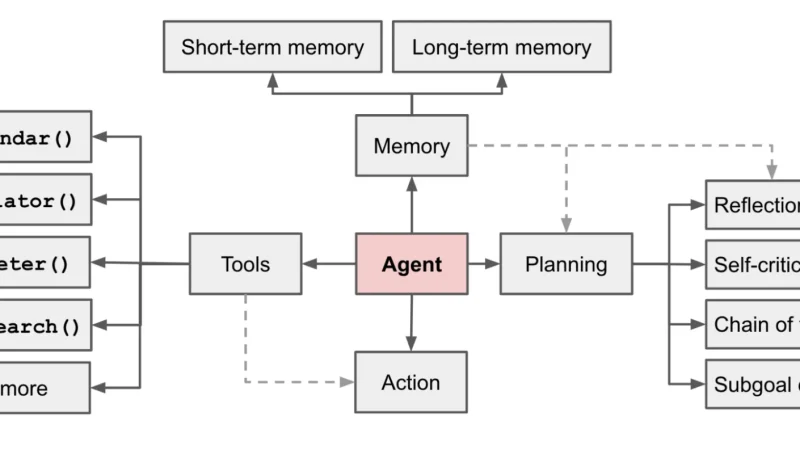
An AI agent is a program that uses a language model as its brain to decide for itself which steps to take toward a goal: it reasons, calls external tools, observes the result and repeats that loop until it is done. Unlike a chatbot, it does not just answer; it acts.
Recipe for oMLX 0.6.4 on a Mac M5 Max with 128 GB: install, Claude Code and advanced settings with screenshots (Lightning MTP, VLM MTP and DFlash). Includes our own September 2026 benchmarks, with up to 1.88x more tokens per second.
The idea of UI generated on the fly instead of pre-built reached production in 2025. After a year of real-world use, the balance is more nuanced than the initial enthusiasm suggested.
Direct Preference Optimization (DPO) and its variants, IPO, KTO, and SimPO, have displaced RLHF as the preferred alignment method for language models: they drop the separate reward model, cut training cost, and are easier to reproduce. RLHF still has an edge only for frontier models with very large budgets.
Synthetic data has moved from a precarious substitute for real data to a central component of modern model training: the most reliable pattern expands a real core of 500 examples with thousands of synthetic paraphrases, provided you validate diversity, correctness, and distribution, and keep at least 30% real data to avoid model collapse.
Hybrid RAG in 2026 combines dense and lexical search fused with RRF, cross-encoder reranking over the top-50 candidates, structure-aware chunking, and continuous evaluation with Ragas or TruLens. It is the pattern that survives in serious production systems three years after the initial embeddings boom.
The first invoice for a production agent usually runs double or triple the estimate. This article walks through five real levers, in priority order, caching, routing, context control, batching, and telemetry, to cut cost without touching perceived quality.
LLM red teaming has gone from an esoteric activity to a mandatory practice. With the OWASP Agentic Top 10 and the CSA Agentic AI Red Teaming Guide converging on shared vocabulary, this is the operational playbook any team deploying agents needs to have.
Prompt engineering has moved from viral tricks to a discipline with reproducible patterns: few-shot, chain-of-thought, and structured output with function calling. Teams treating prompts like code (versioned, tested, and monitored) get consistently better results than those who improvise.
FinOps for AI counts different units than classic cloud FinOps: tokens, calls, computed embeddings and GPU time, all of which scale nonlinearly with use. The costliest habit is sending everything to frontier models; 40 to 70 percent of those calls run on mid-tier models with no noticeable quality loss. Uncached RAG and self-recursing agents do the rest.
Knowledge graphs spent two decades waiting for their moment. With LLMs now bridging free text and formal ontology, and the GraphRAG pattern already mature, the technology is back in the spotlight. Time to look at why it finally fits and where it actually pays off.
Large language models have spent two years promising effortless documentation for code, APIs and architecture. After watching dozens of projects try it, clear patterns emerge for where it works and where it just becomes more debt.
Guardrails frameworks promise to filter language-model inputs and outputs to block data leaks, harmful content, or hallucinations. After evaluating four of the most popular ones in production, I cover what they actually do, what latency and billing cost they add, and when they pay off over simpler controls.
Agents that chain calls to models, tools and memory are hard to debug without instrumentation designed for them. After a long year running agents in production, I cover what to measure first, which standards are consolidating, and which costly mistakes are avoided by getting the traces right from the start.
A caching proxy in front of a language model can cut the token bill significantly, but it introduces subtle risks if the design is not careful. Which cache types work in production, where the usual traps sit, and how to add them without degrading the experience.
An inference router decides which model answers each incoming request, weighing cost, latency and how hard the request actually is. Well-built inference routers cut total token spend by 30 to 70 percent with no quality loss the user can perceive. Four patterns cover most cases: length, task type, an auxiliary classifier, and learned routing.
AI testing breaks the assumption every automated suite was built on, because the same input no longer produces the same output. Anthropic documents that temperature 0.0 is still not fully deterministic, and OpenAI's seed parameter only promises mostly reproducible results. What works instead is a layered belt of checks that catches regressions without tripping over ordinary variance.
The term Agent OS has spent a year gaining traction across research and product circles. It describes a layer that goes well beyond an agent library: request scheduling, context management, persistent memory, and isolation. A look at the real state of that concept.
Model Context Protocol turns ten months old since Anthropic's announcement, and it is no longer just a proposal: hundreds of servers, cross-vendor implementations and a public registry now back it. A look at what has worked, what is still weak, and why 2025 marks the shift from curiosity to basic infrastructure.
After months of rumors, OpenAI released GPT-5 in early August. The first weeks of real-world use show a picture less spectacular than the marketing suggested and more useful than many expected. It is worth separating what is genuinely new from what is merely incremental.
Small language models have become genuinely useful. Phi-3.5, Gemma 2, and Llama 3.2 fit on modest hardware and solve bounded tasks without reaching the cloud. A look at where they fit on the factory floor and when skipping the large model pays off.
RAG 2.0 means retrieval built from several sources at once rather than a single vector search: dense embeddings, lexical matching, and knowledge graphs that capture relationships between entities, with a reranking layer ordering the final candidates. The 2023 pattern of one vector database plus an LLM no longer describes what production systems actually do.
Gemini 2.5 Pro reached preview on 25 March 2025 and general availability at the end of June, alongside the cheaper, faster Gemini 2.5 Flash. Two things separate it from Gemini 2.0: a one-million-token context window that behaves stably to at least 500k, and multimodality that has left the demo stage behind.
Anthropic released Claude Opus 4 and Claude Sonnet 4 on 22 May 2025, the first major naming jump since the 3.5 series. Claude 4 reasons noticeably better over long programming tasks: multi-hour refactors that previously stalled without a human nudge now run further alone, and the family targets agentic, multi-step flows.
For a decade, knowledge graphs were an academic idea with few real use cases, held back by the cost of building and maintaining the schema. LLMs have changed that equation: they now extract entities automatically and help anchor answers, audit reasoning, and support agents without hallucinating.
Continuous RAG evaluation catches the quiet kind of failure: the system never goes down, never returns errors, never trips a latency alert, it simply answers worse as the index, the model, and user questions drift. Track retrieval precision, effective recall, faithfulness to the retrieved context, answer relevance, and p99 latency.
AI agents have moved from a lab curiosity to serious SDKs from three major providers. A reflection on moving from the flashy demo to an internal use case that shifts a real, measurable metric.
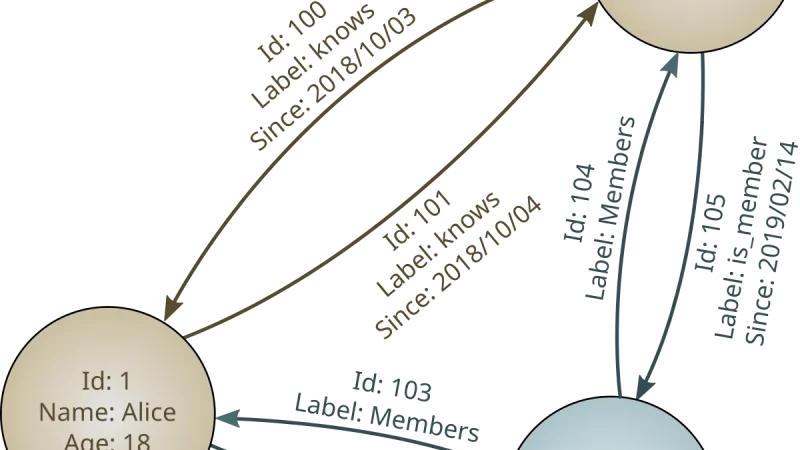
Graph RAG layers an explicit graph of entities and relationships on top of retrieval, so a question can be answered by traversing connections rather than by vector similarity alone. Microsoft Research published the GraphRAG paper in April 2024 and open-sourced the code that July. Lighter variants such as LightRAG and HippoRAG followed, running on Neo4j or Memgraph.
Claude 3.7 Sonnet, released by Anthropic on February 24, is a careful refinement rather than a generational jump. The same model answers in standard mode or in an extended thinking mode you switch on per request, trading tokens and latency for better results on hard problems. It also ships Claude Code, a command-line tool for programmers.
vLLM remains the reference engine for serving LLMs on GPU in 2025: automatic prefix caching sharply cuts latency for repeated prompts, speculative decoding speeds up large models, and multi-LoRA support lowers the cost of multi-tenant SaaS, though multi-GPU support and non-NVIDIA hardware remain weak points.
GraphRAG has been in real enterprise use for over a year: during indexing, an LLM builds a knowledge graph that answers global questions about a corpus well, precisely where classic RAG fails because no single chunk holds the full answer. Here I compare indexing costs, the cases where it pays off, and the hybrid pattern that teams have settled on.
Three years after RLHF became popular, the model-alignment field is far richer. A review of RLHF, DPO, and newer methods such as KTO and ORPO, with criteria for choosing between them.
Google released Gemma 2 in mid-2024, and it has since seen real production use. A look at how it competes in the open-model ecosystem, which sizes actually make sense, and where its adoption has settled in.
6 min2624.2
We use first- and third-party cookies to analyze site traffic. You can accept them, reject them, or configure your choice.
Learn more about cookies
Cookie preferences
NecessaryEssential for the site to work. Always on.
AnalyticsHelp us understand how the site is used (Google Analytics).