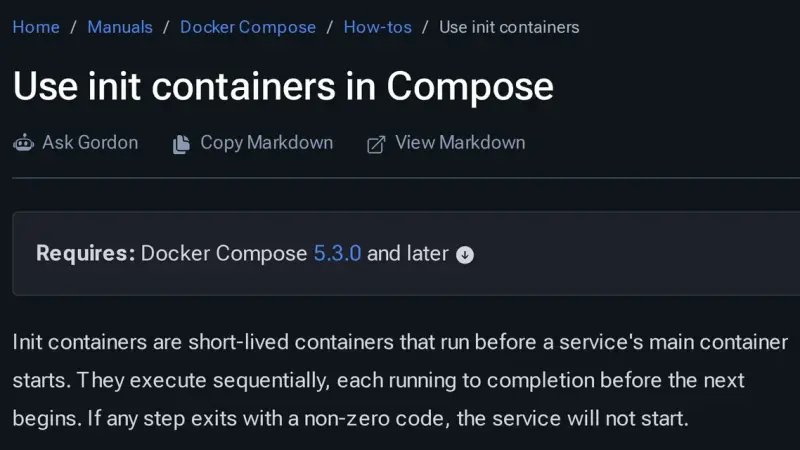
Docker Compose 5.3.0, released on 2 July 2026, adds init containers through the pre_start key: steps that run in ephemeral containers, in order, before the service starts. Use them for migrations, volume permissions and generated configuration. Compose 2.40.3 rejects the whole file, and every step must be idempotent because it runs again.
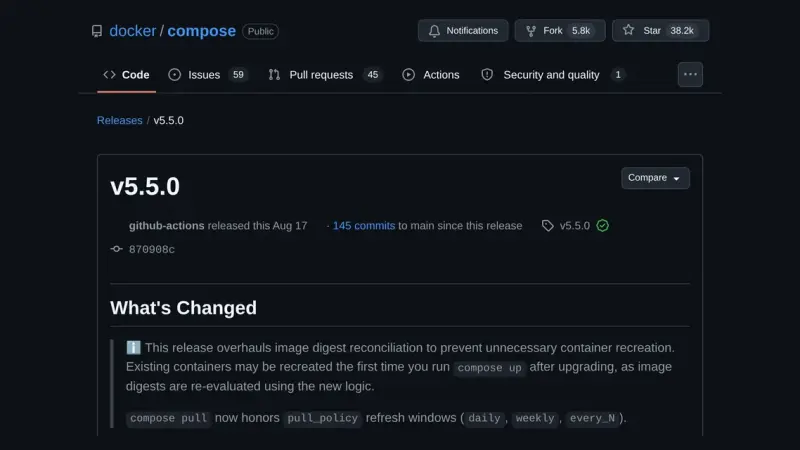
Docker Compose 5.5 changes the digest it uses to decide whether a container's image has changed. On the containerd image store, containers that Compose 2.40 or a pulling 5.4 up labelled with the index digest are recreated once on the first up, with no real change. up --dry-run lists them beforehand.
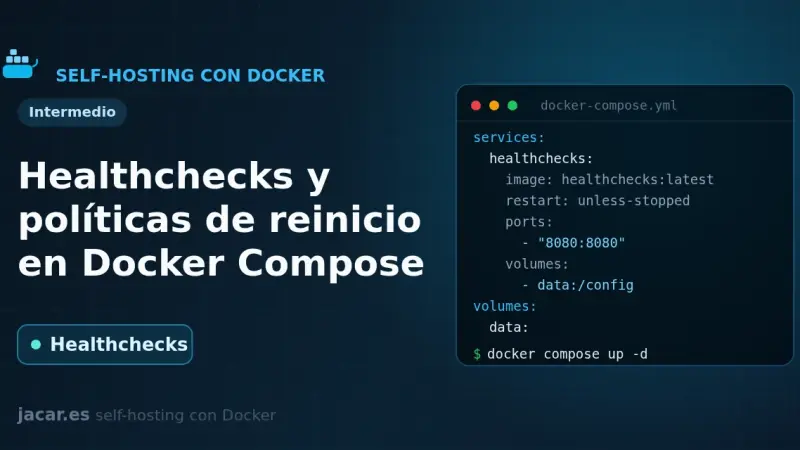
A healthcheck is a command Docker runs periodically inside the container to decide whether the service is healthy; its state moves from starting to healthy or unhealthy. Combined with a restart policy (no, always, on-failure or unless-stopped) and with depends_on and the service_healthy condition, it stops an application from starting before its database.
Open GSD (Git. Ship. Done.) is an open-source, MIT-licensed toolkit for steering coding agents without losing context: it splits work into five phases (discuss, plan, execute, verify and ship) and delegates the heavy lifting to subagents that each start with a clean context. Its core is the gsd-core engine and the gsd-pi terminal agent.
100 must-have apps for your M5 Mac organised into 20 categories: browser, notes, terminal, IDE, containers, AI and more. Each pick with purpose, key features, plugins, pricing in EUR and the official link.
After fourteen months testing AI-integrated DevOps tools across several teams, the stack that stays is small: Claude Code, Cursor, and Aider for code; PagerDuty AIOps, Datadog Bits AI, and Grafana Assistant for alert triage; and OpenTofu with OPA for infrastructure generation bounded by policy rules.
You install Portainer with Docker Compose by writing a single compose.yaml file and running two commands. Portainer CE 2.40 STS supports Docker Compose v2 natively, enables HTTPS on port 9443 out of the box, and manages Docker Engine, Swarm, Kubernetes and ACI from one panel. It runs on Ubuntu 24.04 or Debian 13.
Platform engineering worked where teams built on concrete, painful problems and offered golden paths developers actually wanted, run with a product mindset. It stalled where the output was an empty Backstage portal: technically correct, unvisited, solving no operational problem. Three years after the Gartner hype of 2023, that split separates the winners from the sunk cost.
Dokku is a single-server open-source PaaS that reproduces Heroku's git push deploy flow using Docker, buildpacks and an automatic SSL reverse proxy. Jeff Lindsay started it in 2013 and it is still actively maintained: release 0.35, from mid-2025, added Cloud Native Buildpack improvements and Caddy as an alternative to nginx.
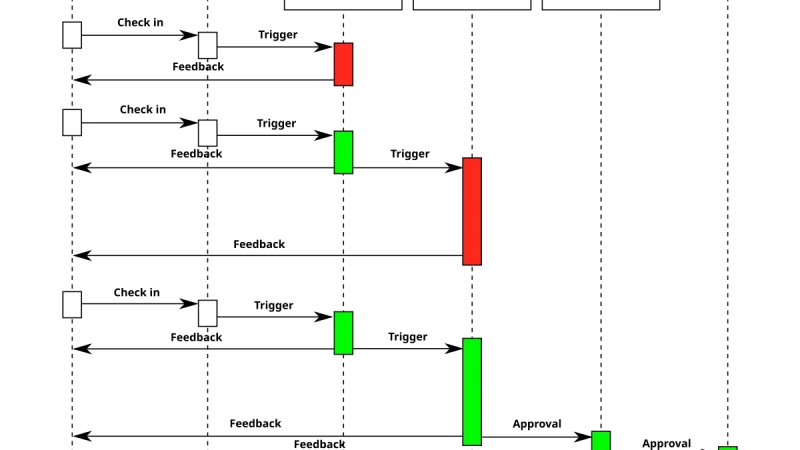
AI agents are starting to earn a real place in continuous integration pipelines: reviewing diffs, proposing fixes, generating missing tests. Six months of real-world use to separate the patterns that work from the ones that end up costing more time than they save.
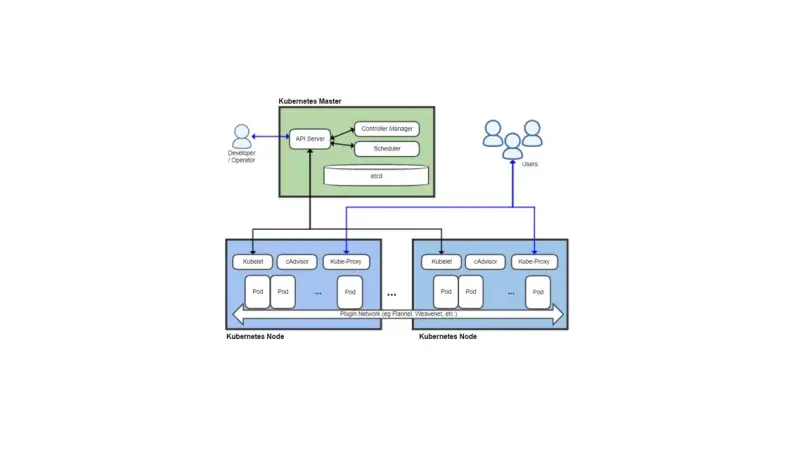
Kubernetes 1.32 Penelope shipped in December and has been running in clusters for several months. It is a good time to look at which changes have aged well, which created extra work, and what lessons to carry into the jump to 1.33.
Kubernetes 1.33 (Octarine) lands April 23. In-place pod resize moves to beta and ships on by default, sidecar containers finally reach GA, and several endpoint and security deprecations arrive that operators should review before upgrading from 1.32.
Coolify delivers a Vercel- or Heroku-like experience on your own servers: automatic HTTPS, managed databases, and branch previews without per-build or bandwidth fees. After several months using it on production VPS, here is where it shines, where it still has rough edges, and which teams will genuinely benefit from it.
A home lab is a self-hosted services lab, at home or on a VPS, where you practice real system administration: reverse proxy, centralized authentication, monitoring with Prometheus and Grafana, and backups verified with Restic. A second-hand mini PC with 16 GB of RAM is enough for thirty or forty containers, and what you learn transfers directly to professional work.
JuiceFS is a distributed, POSIX-compliant file system that separates data, stored in an S3-compatible object store, from metadata, stored in a database such as PostgreSQL or Redis. This guide installs JuiceFS on a three-node Linux cluster to share files without relying on NFS.
Semaphore is the open-source Ansible web UI that solves the four scaling problems: audit trails, role-based permissions, execution history, and centralised secrets. It consumes ~500 MB versus AWX at ~4 GB. The pragmatic choice for mid-size teams that have outgrown running playbooks from a shared terminal.
Platform engineering formalizes the internal product development teams need. An Internal Developer Platform (IDP) centralises deployment, observability and self-service behind a unified interface so product teams deliver value without becoming infrastructure experts. Investment pays off from around 30 to 50 developers.
Vault centralises secrets with automatic rotation, a full audit trail and granular access policies. A practical guide for teams moving beyond a .env file: the concepts you actually need, the setup that works, and the mistakes that make the migration painful.
Google's SRE book (2016) is canonical reading, but it is written for thousands of engineers and in-house datacenters: applying it literally on a small team creates friction. Five principles do travel (SLOs, error budgets, blameless postmortems, toil management, humane on-call); what does not scale is Google's infrastructure and dedicated roles.
Migrating from monolith to microservices means splitting a single system into independent services that deploy and scale on their own. It gains granular scalability and team autonomy, but adds real operational complexity: stable interfaces, Kubernetes orchestration, and a mature DevOps culture are conditions, not optional extras, for the migration to pay off.
6 min2704.2
We use first- and third-party cookies to analyze site traffic. You can accept them, reject them, or configure your choice.
Learn more about cookies
Cookie preferences
NecessaryEssential for the site to work. Always on.
AnalyticsHelp us understand how the site is used (Google Analytics).