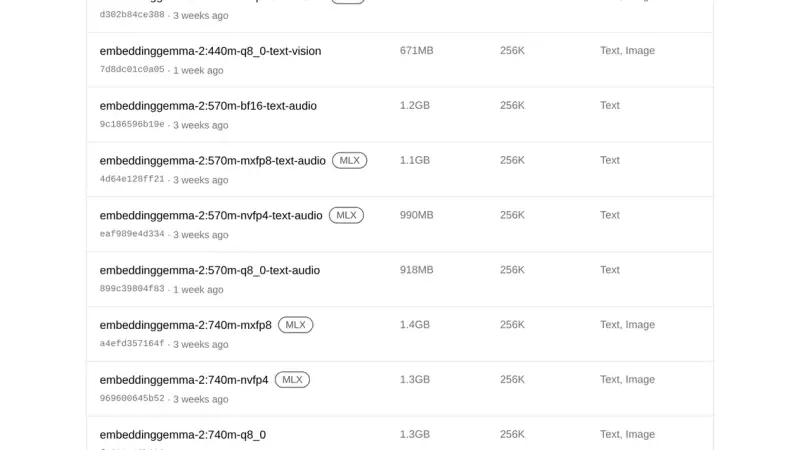
Ollama prints this model requires MLX support, but the MLX runtime is not available when you pull a tag that only exists as MLX safetensors, such as embeddinggemma-2:740m-bf16 or phonon, on a machine without MLX: Linux arm64, Linux without an NVIDIA GPU, or Windows. Pull the GGUF variant (q8_0) with Ollama 0.40.4 or later.
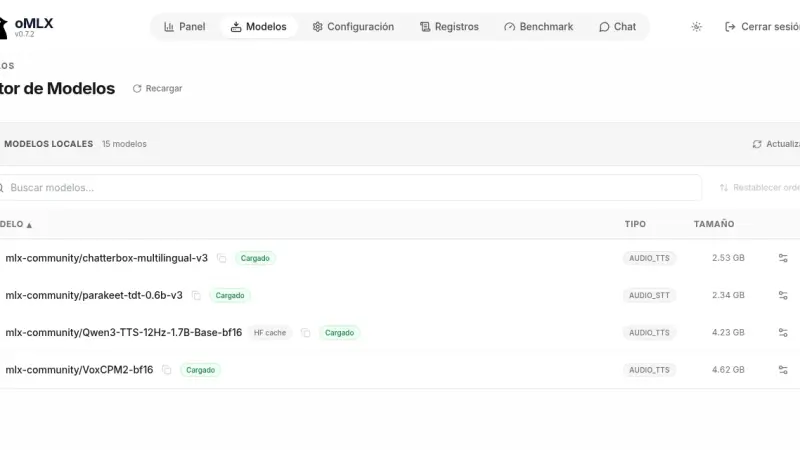
oMLX serves text-to-speech (TTS) models on an Apple Silicon Mac through the same API as OpenAI. With POST /v1/audio/speech you request audio in a preset voice, a voice described in plain language or a voice cloned from a few seconds of reference. On an M5 Max, Qwen3-TTS 1.7B generates each second of audio in 0.33 s.
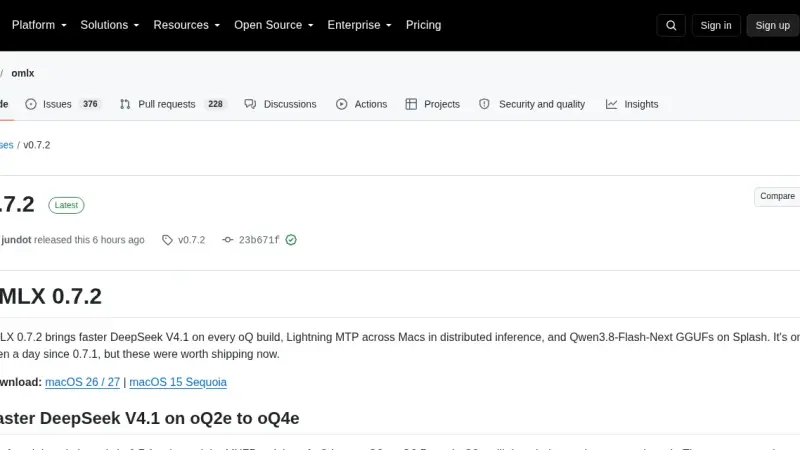
oMLX 0.7.2, released on 21 October 2026, one day after 0.7.1, speeds up DeepSeek V4.1 on the oQ2e to oQ4e quants, turns on Lightning MTP in multi-Mac clusters, runs Qwen3.8-Flash-Next GGUFs on Splash and stops re-prefilling the whole conversation on every Claude Code turn. You upgrade it from the app, Homebrew or source.
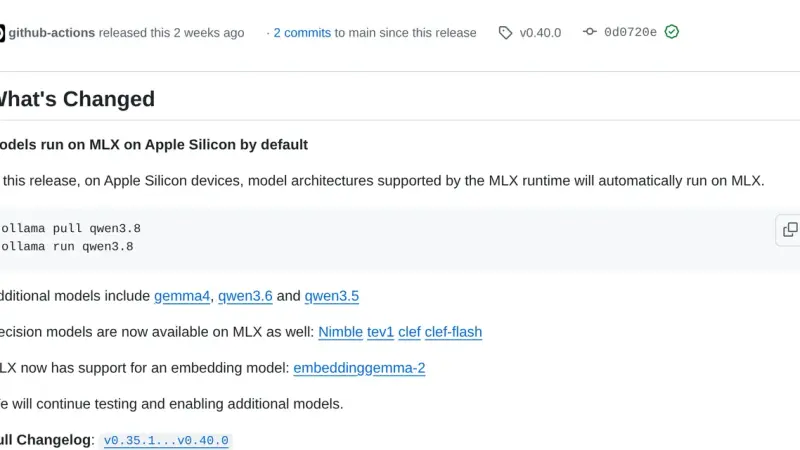
Since Ollama 0.40, released on 25 September 2026, models with a supported architecture run on MLX instead of llama.cpp on Apple Silicon Macs. Ollama picks the model variant at download time, and ollama ps shows in its RUNNER column which engine serves it. On Linux and Windows llama.cpp is still the default.
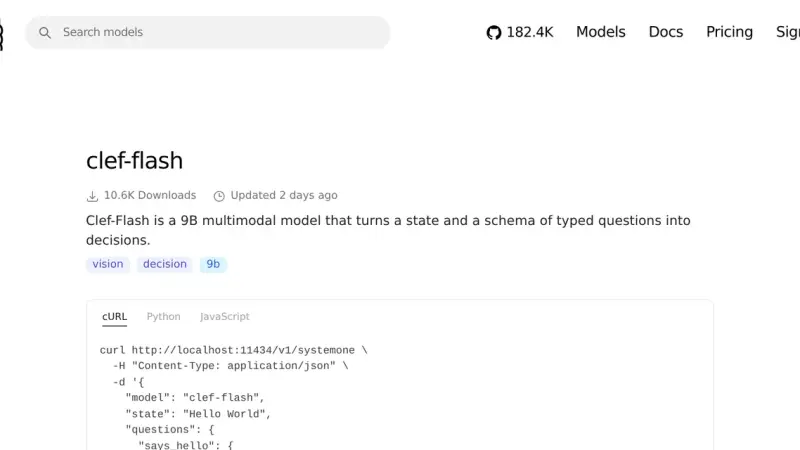
Clef and Clef-flash are the open decision models Cloudflare released on 1 October 2026: instead of text they return a choice with its probability. On Ollama 0.35.1 you call them through /v1/systemone. Clef-flash labelled 23 of 24 support tickets correctly in my test, and the only miss had the lowest confidence.
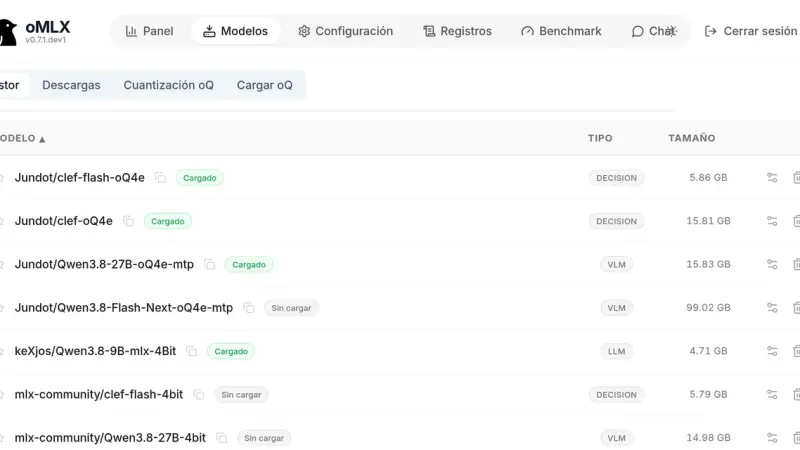
Since oMLX 0.7.1.dev1, one server on your Mac serves Qwen on /v1/chat/completions and the Clef decision models on /v1/systemone. On an M5 Max, Clef-flash decided each ticket in 111 ms and, with Qwen writing the reply, triage got 39 of 40 labels right against 34 with Qwen alone.
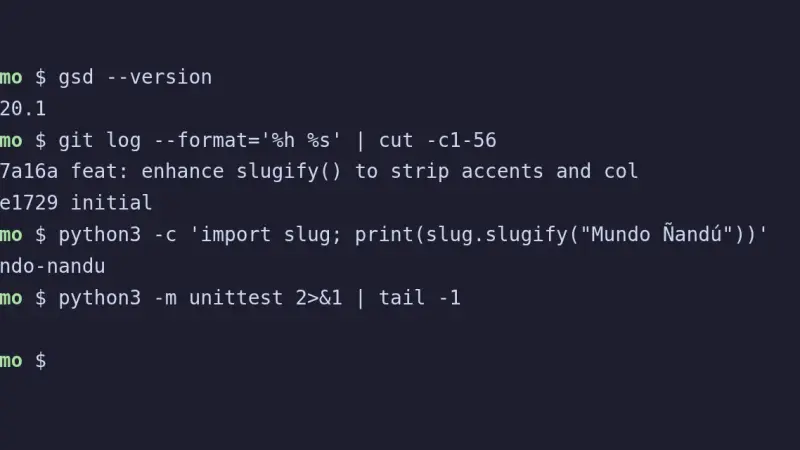
To install gsd-pi, the Open GSD terminal agent, run npx @opengsd/gsd-pi@latest with Node.js 22.18 or later. It works without an API key: with a models.json pointing at llama.cpp and a 64k context, a 4B Qwen3.5 finished a task with 12 passing tests and a commit. gsd-core, by contrast, installs inside Claude Code or OpenCode.
OpenCode uses a local model when you declare an @ai-sdk/openai-compatible provider in opencode.json with the llama-server or Ollama URL and the model's context limit. Version 1.18.31 sends 7,516 tokens on its first turn, so the 4k context Ollama assigns by default without a large GPU is not enough: reserve 32k.
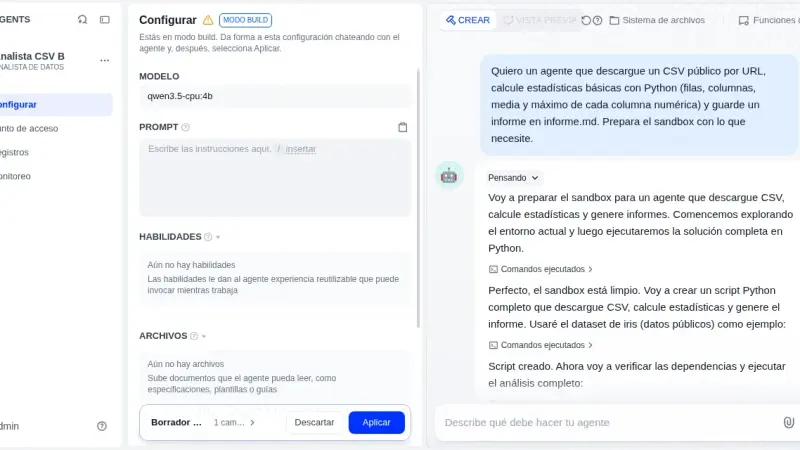
Dify Agent, the Linux-sandbox agent Dify introduced in 1.16, works with a local model once you install the Ollama plugin and switch on tool calling. With Dify 1.17.1 and Qwen3.5-4B on a CPU, the published agent returned correct figures in three out of three runs; Build mode finished none of its three sessions.
20 min95
We use first- and third-party cookies to analyze site traffic. You can accept them, reject them, or configure your choice.
Learn more about cookies
Cookie preferences
NecessaryEssential for the site to work. Always on.
AnalyticsHelp us understand how the site is used (Google Analytics).