Categories

Jacar mascot — a curious laptop A friendly laptop whose eyes follow your cursor.

Madrid · ES/EN · async-first

DevOps &

Honest infrastructure for small teams. No theatre, no slides, with code that stays with you.

LEARNING PATHS

From first step to mastery, in order

Guided journeys through the best of the archive — without getting lost among hundreds of articles.

Explore all paths

How to install Portainer with Docker Compose v2

You install Portainer with Docker Compose by writing a single compose.yaml file and running two commands. Portainer CE 2.40 STS supports Docker Compose v2 natively, enables HTTPS on port 9443 out of the box, and manages Docker Engine, Swarm, Kubernetes and ACI from one panel. It runs on Ubuntu 24.04 or Debian 13.

NIST PQC: The Post-Quantum Cryptography Standards

In August 2024, NIST published its first finalized post-quantum cryptography standards: FIPS 203 (ML-KEM) for key exchange, FIPS 204 (ML-DSA) for digital signatures, and FIPS 205 (SLH-DSA) as a hash-based alternative. They replace RSA and ECDSA before a quantum computer can break them, and hybrid implementations are already live in Chrome and Cloudflare.

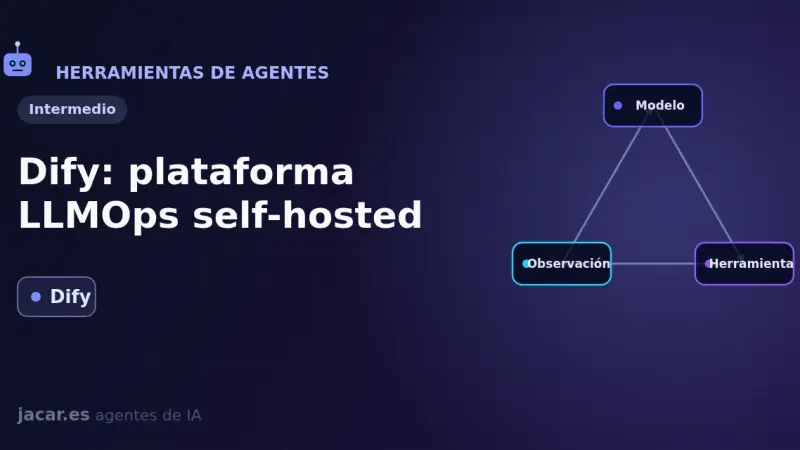
Dify: a self-hosted LLMOps platform

Dify is an open-source platform for building AI applications and agents, with a visual workflow canvas, prompt management, a RAG knowledge base and LLMOps layers. You can self-host the whole thing with Docker Compose on top of Postgres, Redis and a vector database. This guide explains how to deploy it and when it beats Flowise and Langflow.

LATEST POSTS Just out

Fresh from the oven

  1. Artificial Intelligence

    What Colibri is and how it runs giant MoE models by streaming experts from disk

    Colibri is an Apache 2.0 inference engine written in C that runs Mixture-of-Experts models of up to 2.8 trillion parameters without loading them whole: it keeps the dense part in RAM and reads from the SSD only the experts the router picks for each token. That is why its speed depends on the disk, the cache and free RAM.

  2. AI Agents

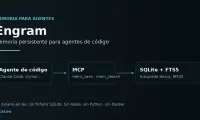
    Engram: persistent memory for coding agents

    Engram is a Go binary backed by SQLite and FTS5 that gives coding agents persistent memory over MCP. It stores decisions and conventions between sessions, syncs through git and needs no Node, Python or Docker. Its search is lexical rather than semantic, and that shapes what you should save.

  3. Tools

    Activepieces and Windmill against n8n: which self-hosted automation to choose

    n8n is not open source: its Sustainable Use License limits you to your own internal business purposes and forbids charging people to access a hosted instance. Activepieces publishes its core under MIT but keeps agents, projects and API access outside it. Windmill compiles to AGPLv3 from source, yet the distributed Community Edition is not open.

  4. Artificial Intelligence

    ThinkingBox: checking whether your agent does real work

    ThinkingBox is an MIT-licensed Microsoft sandbox that runs an agent against stateful MCP tools and judges it by the side effects it leaves in the system, not by what it claims to have done. Its companion benchmark covers 507 business tasks, each repeated twenty times.

  5. How to Install

    How to install Jellyfin with Docker

    Jellyfin is a GPL-2.0 media server that asks for no account and no subscription. You install it from the official compose file, which publishes port 8096 and mounts three separate volumes for configuration, cache and media. The stable release in August 2026 is 10.11.11, and hardware transcoding is included.

  6. Tools

    k3s vs k0s vs Talos Linux: which lightweight Kubernetes to choose

    k3s and k0s are Kubernetes distributions you install on a conventional Linux host you keep administering; Talos Linux is an immutable operating system with no shell and no package manager, driven by an API, running upstream Kubernetes. They are not layers: you pick one, and node count decides which.

  7. Artificial Intelligence

    Why many code agents use agentic search instead of a vector database

    Agentic search means the model plans its own queries against the repository using grep, file listings and a language server, instead of querying an embedding index built beforehand. Claude Code and Cline work this way by design, yet Cursor and Devin Desktop still index, and their own documentation says so.

  8. How to Install

    How to install k3s in your homelab

    k3s is a conformant Kubernetes distribution that fits in a 68 MiB binary and installs with one command. It ships containerd, Flannel, CoreDNS, Traefik, ServiceLB and local storage already wired, keeps its state in SQLite, and has a node serving in three seconds.

  9. How to Install

    How to install Karakeep, your bookmark manager with AI tagging

    Karakeep is a self-hosted bookmark manager that stores links, notes, images and PDFs, archives the whole page with monolith and videos with yt-dlp, and tags everything with a language model. It installs from a three-container compose file, and tagging works with either a hosted model or a local Ollama.

  10. Artificial Intelligence

    Agent Lightning: reinforcement learning for agents without rewriting them

    Agent Lightning is the Microsoft Research framework that applies reinforcement learning to the model behind an agent you already wrote. The agent points its OpenAI client at the Agent Lightning proxy instead of the model, and the proxy records requests, responses and rewards while the agent keeps its tools and control flow.

THE NEWSROOM

Most read, by category and trending

Most read

  1. Technology NIST PQC: The Post-Quantum Cryptography Standards 3.5K
  2. Artificial Intelligence How to install and tune oMLX on M5 Max 128 GB 3.3K
  3. Technology Next-generation NPUs: the hardware moving AI in 2026 2.5K
  4. Mac Essential Software for Your New M5 Mac (2026 guide) 2.1K

Most voted